
Comvita vs Manuka Health: Which Manuka Honey Wins?
Two of the most-bought Manuka honey brands in the US, compared side by side on the four metrics that matter: UMF rating, labelled MGO, retail price, and cost per gram of MGO.
Head-to-head
Comvita vs Manuka Health
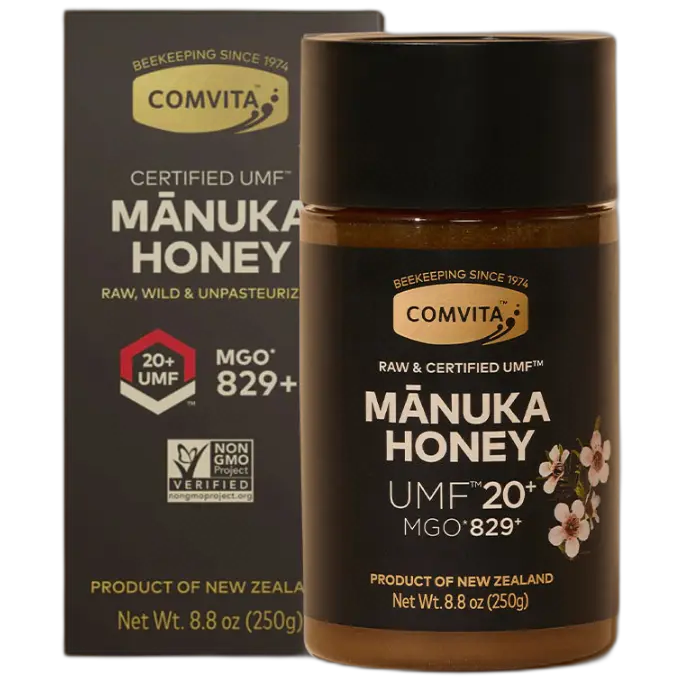
Comvita
UMF 20+ Manuka Honey
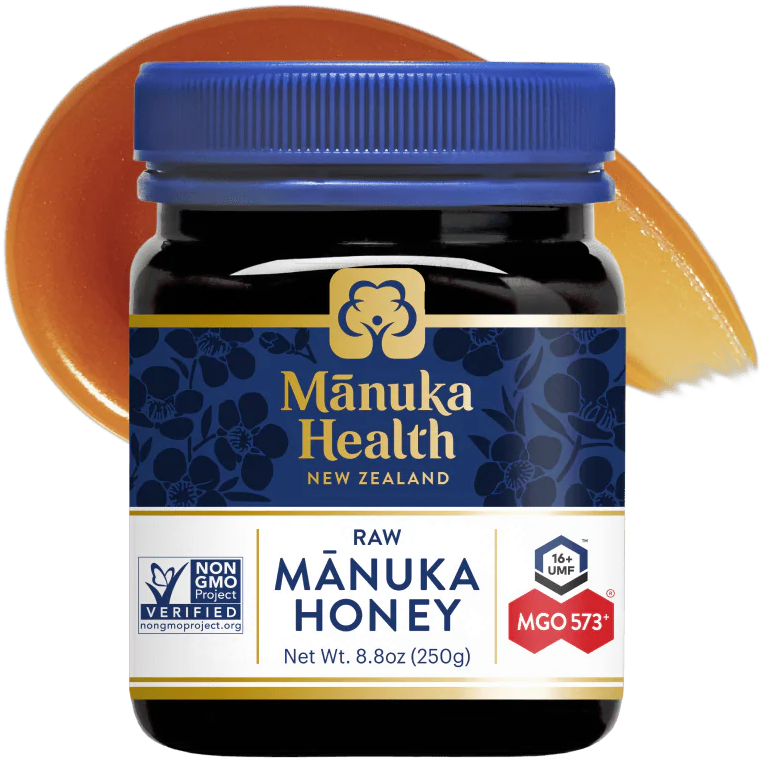
Manuka Health
UMF 16+ MGO 573+ Manuka Honey
| UMF rating | 20+ | 16+ |
| MGO content | 829 mg/kg | 573 mg/kg |
| Potency tier | Premium | High |
| Jar size | 250 g | 250 g |
| Origin | New Zealand | New Zealand |
| Certifications | UMFHA, Non-GMO, Glyphosate-Free | UMFHA, MGO Certified |
| Retail price | $79.99 | $54.99 |
| Cost per gram MGO | $385.96 | $383.87 |
Comvita and Manuka Health, the short version
Comvita is the older, larger brand. Founded in 1974 in Te Puke, New Zealand, it operates the country's largest UMF-certified production line and is widely stocked in US health stores and on Amazon. Manuka Health was founded in 2006, focuses heavily on MGO-grade labelling, and exports to over 45 countries. Both are New Zealand operations. Both are UMFHA-licensed.
The differences worth paying attention to are the rating systems each emphasises and the price-per-MGO each delivers at a comparable potency tier.
Which one has higher MGO content?
The numbers in the table above answer the simple version. The longer answer: Comvita's UMF 20+ jar is labelled 829 mg/kg MGO, while Manuka Health's UMF 16+ jar is labelled 573 mg/kg. That is a one-tier difference in potency. For everyday buyers, the Manuka Health UMF 16+ costs less per gram of MGO. If you want the higher-potency tier, Comvita's UMF 20+ is the comparable jar.
Which one is better value?
Cost per gram of MGO is the metric that exposes the cheap-jar trap. A lower-priced jar with a lower MGO content can deliver more dollars per gram of methylglyoxal than a more expensive jar with high MGO. The cost-per-gram-of-MGO row in the table above shows the actual ratio. Lower is better.
Certifications, sourcing, and trust
Both brands carry the UMF Honey Association certification. Both source exclusively in New Zealand. Both meet the New Zealand Ministry for Primary Industries' Manuka Honey Definition for monofloral certification.
Comvita publishes UMF certificates on its product pages and has a separate medical division (Medihoney) that produces sterile wound-care products for hospitals. The retail jar reviewed here is food-grade. Manuka Health publishes batch-specific MGO numbers and maintains its own apiary network on the East Cape.
Which should you buy?
If price-per-MGO is your decision criterion, choose the winner of the cost-per-gram-MGO row in the table. If you want the highest potency in the comparison, choose Comvita UMF 20+. If you want a reliable middle-tier daily honey at a lower up-front cost, choose Manuka Health UMF 16+.
Either way, both brands are UMFHA-certified and meet the MPI Manuka Honey Definition. The difference between them is incremental, not categorical.
Frequently asked
Are both brands sold in the United States?
Yes. Both are widely stocked on Amazon, in Whole Foods, and in independent health-food stores. Direct-to-consumer is also available from each brand's website with international shipping.
Do they taste different?
Higher-MGO Manuka tends to taste stronger, with more of the characteristic earthy-medicinal back-note. Comvita UMF 20+ leans further in that direction; Manuka Health UMF 16+ is closer to a sweeter, more accessible profile.
What does UMF actually measure?
UMF is a four-marker certification (leptosperin, MGO, DHA, HMF) administered by the UMF Honey Association in New Zealand. See our UMF explained page for the full breakdown.