
Why Does Honey Crystallize? The Chemistry Explained
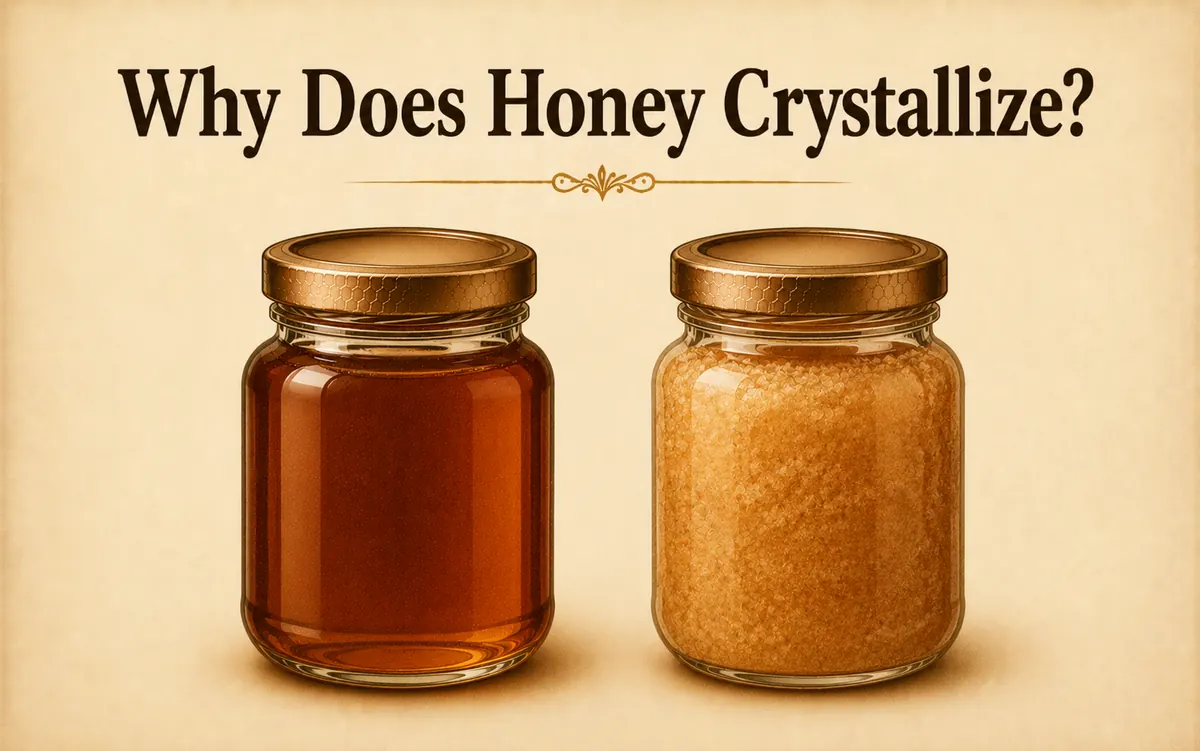
Honey crystallization is a natural physical change driven by the glucose-to-fructose ratio in the honey. Glucose has lower solubility in water than fructose, so when honey is supersaturated with glucose (which most honey is), the glucose gradually separates into solid crystals. The rate depends on glucose content, water content, temperature, and stored particulate matter (pollen, wax fragments) that act as crystallization seeds.
Is crystallized honey still good?
Yes. Crystallization is purely physical, not chemical. The honey's flavor, antibacterial activity (in Manuka), nutritional content, and safety are unchanged. Many traditional honey markets prefer crystallized "creamed" honey for its spreadable texture.
Why do some honeys crystallize faster than others?
The glucose-to-fructose ratio is the primary factor. High-glucose honeys (clover, dandelion, alfalfa) crystallize within weeks at room temperature. High-fructose honeys (acacia, tupelo) can stay liquid for years.
| Honey type | Glucose/fructose ratio | Typical crystallization timing |
|---|---|---|
| Acacia | Low glucose | Years |
| Tupelo | Low glucose | Years |
| Manuka | Moderate | 3-12 months |
| Wildflower | Moderate | 3-9 months |
| Clover | High glucose | Weeks to months |
| Dandelion | High glucose | Weeks |
Does Manuka honey crystallize?
Yes, often. Manuka has moderate glucose content and typically crystallizes within 3-12 months at room temperature. The crystallization texture is sometimes called "creamed" Manuka. The MGO and other antibacterial compounds are unaffected by crystallization.
How can I tell if crystallization is real or fake honey?
Crystallization is actually a sign of authentic honey. Sugar-syrup-adulterated "honey" often resists crystallization because the syrups are mostly fructose. Counterintuitively, a jar that has crystallized over time is more likely to be real honey, not less.
How do I re-liquify crystallized honey safely?
Place the jar in a warm water bath (not boiling) at roughly 35-40°C for 15-30 minutes. Stir occasionally. The crystals dissolve back into solution. Avoid the microwave because uneven heating can locally exceed 60°C and degrade some active compounds (relevant if the honey is Manuka with MGO content).
Common questions
Will crystallized honey go back to liquid forever once warmed?
Generally yes, but moderate-glucose honeys may re-crystallize within months. High-glucose honeys re-crystallize quickly.
Does refrigeration prevent crystallization?
No, refrigeration accelerates crystallization. Honey is best stored at room temperature (15-25°C). Freezing honey can slow crystallization but is not necessary.
Can I buy honey that does not crystallize?
Yes. Acacia and tupelo honeys stay liquid for years. Some commercial honey is filtered to remove crystallization seeds, slowing the process.